𝗘𝘃𝗲𝗿 𝘄𝗼𝗻𝗱𝗲𝗿𝗲𝗱 𝗵𝗼𝘄 𝘁𝗼 𝗺𝗮𝗸𝗲 𝗮 𝗺𝗮𝘁𝗲𝗿𝗶𝗮𝗹 𝘁𝗵𝗮𝘁 𝗰𝗮𝗻 𝘀𝗺𝗶𝗹𝗲 𝗼𝗿 𝗳𝗿𝗼𝘄𝗻?
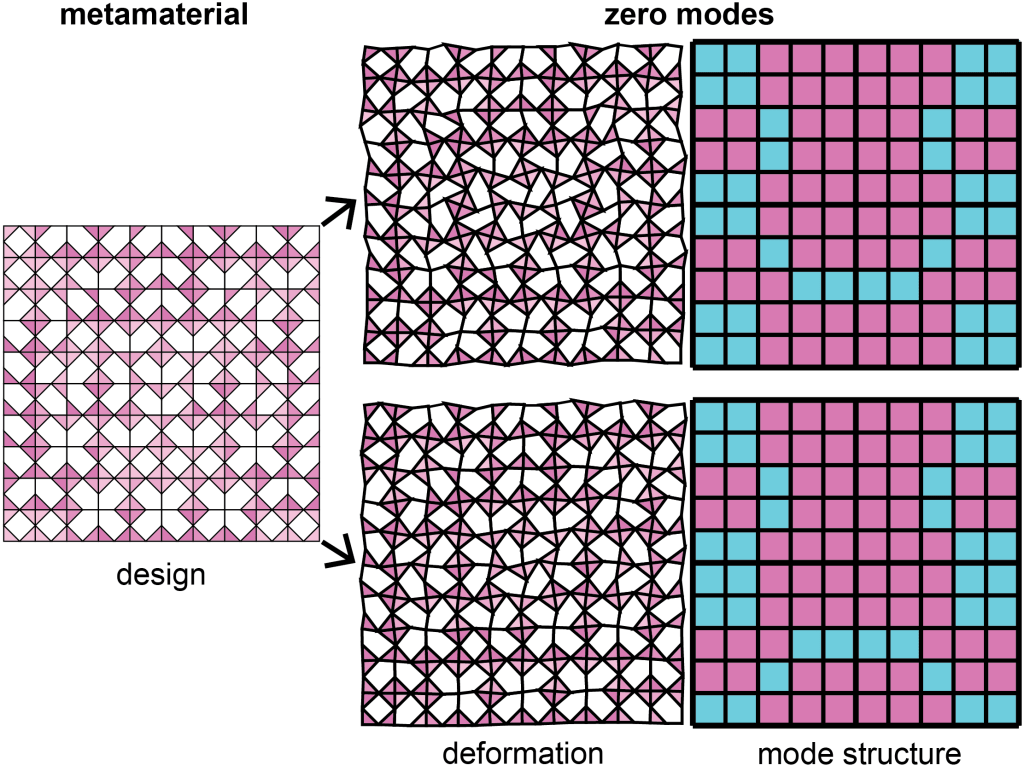
Together with my PhD advisors, Marjolein Dijkstra, Martin van Hecke & Corentin Coulais, we set out to answer this seemingly silly question and, in the process, developed a two-step approach to design mechanical metamaterials with multiple, desired deformation pathways.
🔍 𝗧𝗵𝗲 𝗸𝗲𝘆 𝗶𝗻𝘀𝗶𝗴𝗵𝘁
Instead of directly searching the vast combinatorial design space for the perfect material, we split the design process in two: first, generate designs with rich, general mechanical responses; second, combine and fine-tune to achieve the desired response. Specifically, our method combines neural networks and a genetic algorithm to prospect for designs with a high 𝘱𝘭𝘶𝘳𝘪𝘱𝘰𝘵𝘦𝘯𝘤𝘺—the potential to exhibit multiple, spatially extended deformations—and refine those into a final material with the desired deformations: like a smiley and frowny.
I am happy to share that we published this work in American Physical Society’s Physical Review Research, where it is featured as an editors’ suggestion!
📄 You can check out the paper here.
 Ryan van Mastrigt
Leave a comment